
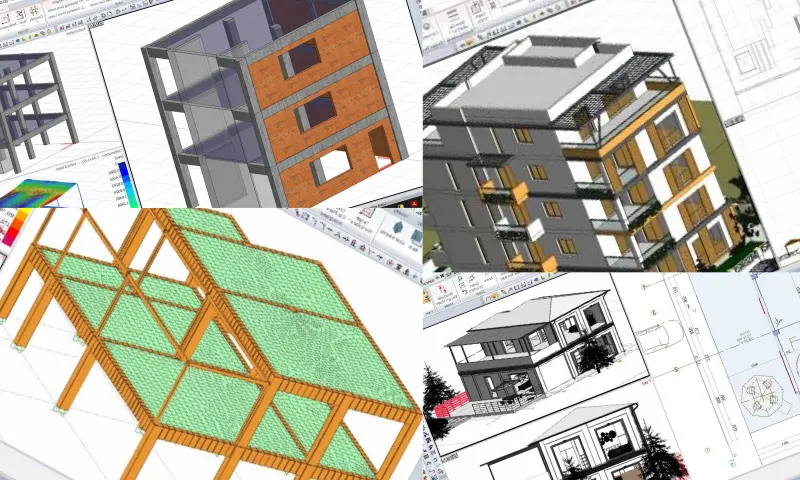
What Does Structural BIM Software Do?
What Should Be Considered When Choosing Structural BIM Software?
Structural BIM Software (Building Information Modeling) are software that facilitate the structural design, analysis, and documentation of buildings. These software enable the digital modeling and analysis of structural features using the building information modeling methodology. Structural BIM software are designed to optimize the workflow of engineers, architects, and other related professionals. The use of these software makes structural design processes more efficient, accurate, and collaborative. It helps in better management of construction projects and increases the effectiveness of communication. For detailed information about Structural BIM Software (Building Information Modeling), you can visit the web address https://idecad.com/architecture-engineering-construction/building-design/bim-workflows-structural-analysis-design/ . There are some important details to consider when choosing Structural BIM Software. Determine which features and functions you need and evaluate the software in line with these needs. Check if it is compatible with other Structural BIM Software and industry standards. Learn about the software provider's technical support services, user forums, and regular software updates. Get detailed information about the software cost, licensing models, and licensing processes.
What is the Structural Analysis Potential of Structural BIM Software?
Structural BIM Software offers a wide range of services in terms of structural analysis potential. These software use advanced mathematical and engineering calculations to analyze the structural systems of buildings. The potential analysis capabilities, such as analyzing different types of loads acting on the structure (live loads, dead loads, wind loads, etc.) to evaluate structural durability, analyzing the behavior of structural system elements like columns, beams, shear walls to ensure structural safety and stability, analyzing the vibration behavior of the structure to ensure structural integrity and comfort, and analyzing the structural performance of materials and sections used to determine the optimum design, play an important role in obtaining accurate and reliable results in structural engineering projects.





