
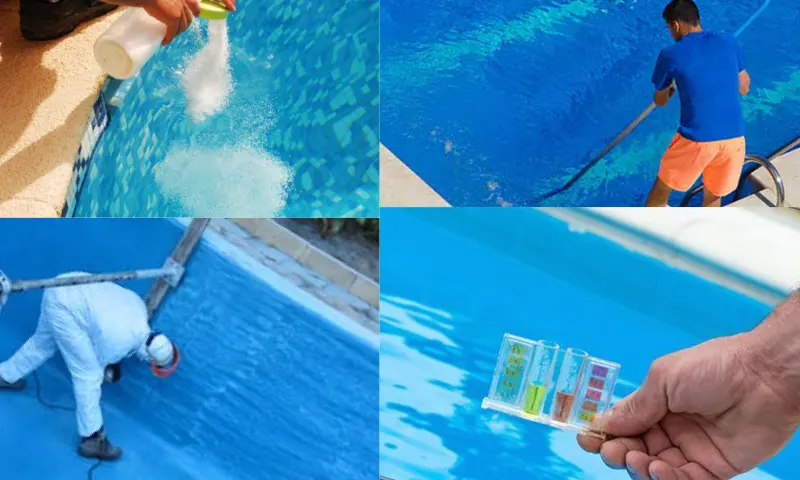
The Importance of Pool Cleaning: A Clean Pool for Health and Safety
Pool cleaning is vital for a healthy swimming experience. Pools that are not cleaned regularly can lead to the formation of bacteria and algae, which can cause skin infections, eye irritation, and other health problems. A clean pool ensures the water remains clear and hygienic, allowing swimmers to enjoy the water safely. As pool water is outdoors, it can become contaminated with dust, leaves, and other external factors. Additionally, microorganisms carried by people entering the pool also negatively affect water quality. Therefore, the pool must be cleaned regularly, its chemical balance maintained, and the water filtered. A healthy pool is achieved through proper cleaning procedures. For information on this topic and to ask your questions, you can visit the relevant online companies on web pages and review them in detail.
Methods and Equipment Used in Pool Cleaning
Pool cleaning can be done by both manual and automatic methods. Manual cleaning methods include cleaning the bottom and walls with a pool vacuum and collecting leaves and debris from the pool surface with a net. Automatic cleaning systems can be provided by pool robots. These robots clean the pool floor and walls on their own, reducing the workload. Furthermore, filtration systems are of great importance for keeping the water continuously clean. Filters regularly strain the water, removing dirt and foreign matter. In addition, chemicals used in the pool are an indispensable part of cleaning. Chlorine, in particular, kills bacteria in the pool, keeping the water hygienic. However, correctly adjusting the chemical balance is critical for both cleaning and the health of swimmers.
Maintaining the Chemical Balance of Pool Water
One of the most important steps in pool cleaning is maintaining the chemical balance of the water. A pool water pH level between 7.2 and 7.6 is ideal for both pool cleanliness and the health of swimmers. A low pH level causes the water to be acidic, which can lead to skin irritation for swimmers and damage pool equipment. A high pH level causes the water to become cloudy and reduces the effectiveness of chlorine. Regularly checking the chlorine level is of great importance for keeping the water hygienic. Additionally, algaecides can be used to prevent algae formation. To ensure chemical balance, the water must be tested regularly, and chemicals added as needed. These procedures ensure that the pool water remains clean and safe at all times.





