
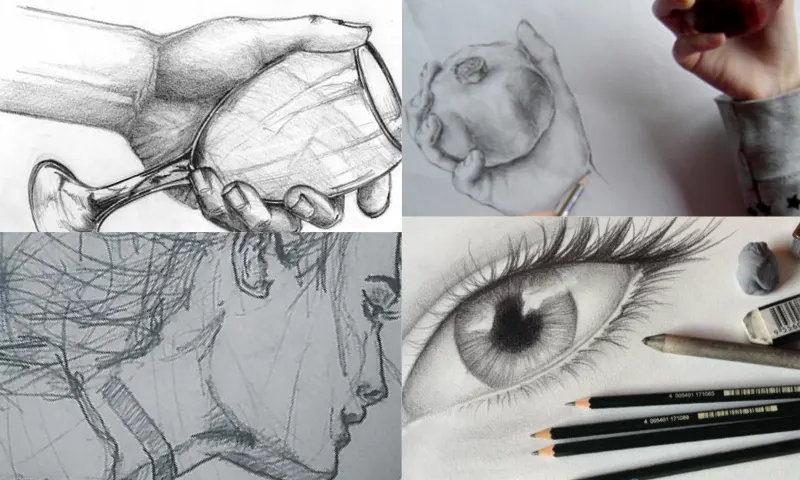
Charcoal Drawing Training: Deepening the Fundamentals of Art
Charcoal drawing is one of the most fundamental techniques in the art of drawing. These drawings, made only with tools like black pencils or charcoal, improve the artist's observation skills, drawing ability, and power of expression. Charcoal drawing is an excellent starting point for those beginning to learn drawing, as mastering light, shadow, and details correctly with this technique lays the foundation for artistic skills. Charcoal drawings strengthen the artist's ability to observe and express emotions through lines. They also enhance hand-eye coordination, manual dexterity, and patience. Therefore, charcoal holds an important place not only as an art form but also as a tool for personal development. Learning and practicing it sharpens individuals' visual perception while developing their artistic thinking patterns. For information on this subject and to ask your questions, you can look at related online firms on web pages and examine them in detail from here.
Things to Know Before Starting Charcoal Drawing Training
Before starting charcoal drawing, it is important to have some basic knowledge and information about the right tools. First, the right pencil needs to be chosen. Pencils of different hardness create different tones and effects in drawings. For example, 2B pencils create soft lines, while 6B pencils are preferred for darker and more intense shadows. Another important element is paper. The texture of the paper is also important when drawing. Rough papers create more texture during shading, while smooth papers allow for detailing with sharper lines. Initially, medium-hard pencils and smooth papers are generally preferred. One of the most important techniques in charcoal drawing is shading. The relationship between light and shadow creates depth in the drawing. Therefore, learning shading techniques during the training process enables students to make their drawings more realistic and impressive. When shading, fingertips or light strokes made with charcoal are used, and the drawings are toned naturally.
Advanced Techniques and Tips in Charcoal Drawing Training
Charcoal drawing training progresses with various techniques from basic to advanced levels. While the beginner level focuses on straight lines and basic shapes, advanced levels involve portraits, landscapes, and detailed drawings. Students learn to correctly apply elements such as depth, light, shadow, texture, and perspective. Portrait drawings are one of the most challenging yet most instructive parts of charcoal training. When drawing portraits, the symmetry of the lines of the eyes, nose, mouth, and chin is crucial for accurately conveying the features of the human face. Furthermore, understanding how to shape facial features with light and shadow makes the drawing more vibrant and realistic. Landscape drawings require more detailed observation of the natural elements around us. These types of studies involve training aimed at understanding the texture of nature and its various surfaces. For example, observations are made to accurately draw the rocky structure of a mountain or the details on the bark of a tree, and these observations are integrated into the drawing.





